

Wood is an important crafting material in Rust. It's used in extremely important crafting recipes like the crossbow, arrows, and tools like the hammer and pickaxe. It's also useful in fun crafting recipes like the pool and the acoustic guitar. You will also need wood to craft important wood armor at the start of the game. Wood armor gives the best radiation protection other than hazmat suits, making it important for running monuments.
Fortunately, it's pretty easy to find wood. As you continue to progress, it will become easier and easier to farm it in bulk to do things like:
- Make Early Game Gear Like Crossbows and Bows
- Create Charcoal By Burning Wood for Gunpowder
- Build a Base
After you've found a place to settle down, it's a good idea to start farming wood. This guide will uncover 4 methods to find Wood, and how to farm it effectively and safely.
Farming Wood Stumps and Logs
As you explore, you'll encounter wood in various forms scattered across the landscape. Look for stumps, fallen branches, large logs, and even driftwood along the shores. You can collect this wood using your starting Rock, but upgrading to tools like a Stone Hatchet or Metal Hatchet will make the process faster and more efficient. In some instances, you can simply pick up the wood directly from the ground, making it an easy and quick resource to gather.
Although this method of wood collection is relatively slow, it has the advantage of being quiet. In the early stages of the game, stealth is crucial. Players noisily chopping down trees with tools often attract unwanted attention and may carry large amounts of wood in their inventories. Therefore, gathering wood quietly at the start can be a safer and more strategic approach. Your initial goal is to efficiently collect enough wood to progress, ultimately making your resource gathering more productive and secure.
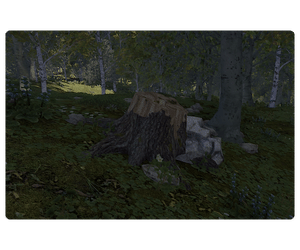
Wood stumps can be found in the desert, arctic, and temperate biomes of Rust. These stumps are easy to collect without any tools. Simply look at the stump, position your cursor over it, and press the E key to automatically add 50 wood per stump to your inventory. These stumps are common in wooded areas, but they can be tricky to spot amidst the grass and bushes, much like searching for hemp bushes when looking for cloth. However, with a keen eye, you'll quickly gather the wood needed to craft a hatchet.
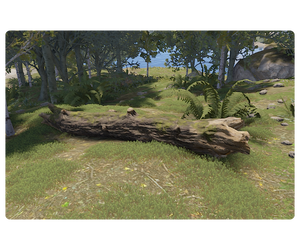
In Rust, you'll find large logs scattered across the arctic, arid, tundra, and temperate biomes. These logs, often draped in moss or snow, blend seamlessly into their surroundings, especially in shadowy areas, making them a bit challenging to spot at times. However, once you do find them, they are a goldmine for wood collection, offering a high yield per hit. Unlike some other wood sources, there's no minigame involved with these fallen trees. Just equip your tool and start harvesting. Their abundance and high wood output make them an essential target for efficient resource gathering, especially in the early stages of the game. Keep an eye out for these moss-covered giants; they're worth the search.
Chop Down Trees
Trees are abundant on the island and will be your primary source of wood in Rust. While deforestation might seem inevitable, rest assured that trees will automatically respawn across the island, ensuring a continuous supply. Almost all trees can be harvested, with the exception of a few found in the swamp biomes.
In Rust, you have various tools at your disposal for wood gathering. You can start by using the rock you spawn with to chop down trees, but it’s the slowest method. A more efficient approach is to collect wood and stone from the ground to craft a stone hatchet. This tool significantly speeds up the process. Different tools yield varying amounts of wood, depending on the type of tree you're harvesting. Upgrading your tools as you progress will make wood gathering more efficient, enabling you to gather resources faster and focus on other essential survival tasks. So, make use of the plentiful trees, and remember that your primary goal is to gather enough wood quickly to upgrade your tools and improve your efficiency.
Below is a table showing how much wood each tool will give you from a large standard tree:
| Tool | Max Yield | Time |
|---|---|---|
| Rocks | 500 | 30 seconds – 1 minute |
| Bone Club | 586 | 25 – 50 seconds |
| Salvaged Hammer | 758 | 20 – 40 seconds |
| Stone Hatchet | 810 | 20 – 35 seconds |
| Metal Hatchet | 867 | 15 – 25 seconds |
| Salvaged Axe | 1000 | 17 – 25 seconds |
| Chainsaw | 1000 | 3 – 5 seconds |
When gathering wood in Rust, you can roughly estimate the amount of wood each tree will provide based on its size. Large trees like beeches and oaks are the most bountiful, offering the maximum yield. Medium-sized trees such as pines and palms yield about three-quarters of the maximum amount. Smaller sources of wood, like fallen logs, large branches, and driftwood, will only give you around a quarter of the maximum harvest. Understanding this can help you prioritize which trees to target for the most efficient wood gathering.
| Tree Type | Approximate Yield |
|---|---|
| Large beeches, oaks | 100% Yield |
| Medium-sized pines, palms | 75% Yield |
| Fallen logs, large branches, driftwood | 75% Yield |
When you strike a tree that can be harvested in Rust, you'll hear a satisfying thunk and see a red X appear somewhere on the tree trunk. Hitting this red X again counts as a double hit, effectively speeding up the tree-cutting process without increasing the yield. This mechanic allows you to cut down trees more efficiently by aiming for the red X with each swing.
The most significant difference between harvesting tools is their speed. The more wood a tree contains, the longer it will take to chop down. Your harvesting efficiency also depends on how consistently you hit the red X, maximizing each swing's impact. Early in the game, you'll likely come across salvaged hammers and craft bone clubs. However, their slow gathering speed makes it crucial to invest in a stone hatchet as soon as possible for better efficiency.
The ultimate wood-gathering tool is the chainsaw, which you can purchase for 125 Scrap at the Outpost monument. The chainsaw is unparalleled in its speed, allowing you to gather wood rapidly. However, it requires Low-Grade Fuel to operate. A major drawback of the chainsaw is its loud noise, which can make it difficult to hear nearby players, potentially putting you at risk of an ambush. Despite this, the chainsaw's efficiency makes it an invaluable tool for those looking to gather wood quickly. Check out our tutorial on how to use a chainsaw in Rust for more information.
Farm Resources and Trade For Wood
The fastest way to acquire wood in Rust is by trading stone at the Outpost monument. The exchange rate is highly favorable: 150 stone will get you 500 wood. Therefore, while you're out farming Sulfur and Metal Ore, it's wise to collect any stone nodes you come across as well. Initially, you might not feel a pressing need for wood if you're focused on expanding your base, but sooner or later, you'll find yourself in dire need of charcoal.
To stay ahead of the game, take your surplus stone to the Outpost and trade it for wood. This not only gives you a steady supply of wood but also ensures you have plenty of charcoal. Once you have the wood, toss it into small furnaces to convert it into charcoal, which is essential for crafting gunpowder and other important items. By efficiently managing your resources and utilizing the trade options at the Outpost, you can maintain a steady flow of essential materials, keeping your base operations smooth and uninterrupted.
Conclusion
There are lots of methods to farm wood in Rust, choose the method that works best for you. Whether it's hitting trees or doing the fast method of trading stone for wood, you will find a way to get the resources you need. Happy farming!