

Researching in Rust is a crucial aspect of advancing in the game. Whether you're trying to learn new blueprints or understand how to use specific items, knowing how to research in Rust can give you a significant advantage. This guide will walk you through everything you need to know about researching in Rust, including how to craft a research table, the costs associated with researching different items, and whether random research is worth it.
What is a research table used for?
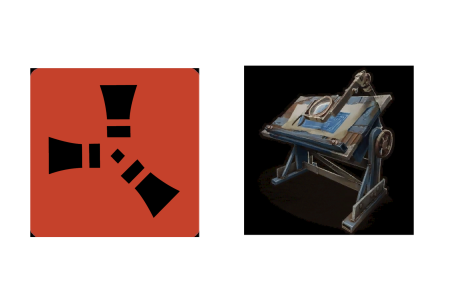
The research table in Rust is a crucial component of the game’s crafting and blueprint systems. It allows players to analyze items they find throughout the game world, enabling them to create tradeable blueprints for these items.
Once a blueprint is crafted, players can trade it, store it, or memorize it. Memorizing a blueprint gives a player the permanent ability to craft the item using the appropriate crafting tables and materials. These memorized blueprints are tied to the player for the server where they were learned, making them a permanent part of the player’s crafting capabilities on that server.
This permanence is why many players prefer to stay on the same Rust server through wipe cycles, as they do not want to lose their hard-earned blueprints. The research table thus plays a vital role in item creation, trade, and player loyalty by preserving crafting knowledge across gameplay sessions.
How to Research in Rust
In Rust, research is primarily conducted using a research table. To start researching, you'll need the item you want to research, a research table, and scrap, which is the in-game currency for research. Here's how you can get started:
- Craft a research table.
- Place the research table in a secure location.
- Interact with the research table and place the item you want to research into the designated slot.
- Insert the required amount of scrap to complete the research.
- Once the research is complete, you'll receive a blueprint for the item. In your inventory, click the "Learn Blueprint" button.
How to Craft a Research Table in Rust
Crafting a research table in Rust is straightforward. You'll need the following materials:
- 200 Metal Fragments
- 50 Scrap
Once you have these materials, open your crafting menu, find the research table, and craft it. The table can then be placed in your base.
Where to Find Research Tables in Rust
There are numerous research tables scattered throughout the game world of Rust, primarily located inside various monuments. Players can also encounter them while exploring the map, inside decaying bases, during raids, and when looting containers along roadsides or within monuments. Occasionally, a research table can be found in the wilderness, often placed there by players who ventured into monuments and brought a table with them. This tactic allows these players to quickly memorize rare items they’ve collected, minimizing the risk of losing valuable items if they face opposition on their way back to their bases.
However, finding a research table can be challenging. It is difficult to determine which monuments contain research tables, as they are not marked on the map. Additionally, since Rust is still under development, monuments and other game elements are subject to change. To assist with this, we’ve put together a list of all research table locations in Rust:
| Monument | Research Table |
|---|---|
| Abandoned Cabins | No |
| Abandoned Military Base | No |
| Abandoned Supermarket | No |
| Airfield | Yes |
| Bandit Camp | Yes |
| Giant Excavator | No |
| Large Harbor | No |
| Small Harbor | No |
| Junkyard | No |
| Large Fishing Village | No |
| Large Oil Rig | Yes |
| Launch Site | Yes |
| Light House | No |
| Military Tunnels | No |
| Mining Outpost | No |
| Nuclear Missile Silo | No |
| Oil Dome | No |
| Outpost | Yes |
| Oxum’s Gas Station | No |
| Power Plant | Yes |
| Satellite Dish | Yes |
| Sewer Branch | No |
| Small Fishing Village 1 | No |
| Small Fishing Village 2 | No |
| Small Oil Rig | No |
| Train Yard | No |
| Water Treatment Plant | No |
How Much Scrap to Research Everything in Rust
The amount of scrap required to research items in Rust varies significantly depending on the level of workbench you are at. Here's how much scrap you need for every tier.
- Tier I Workbench: 4495 Scrap
- Tier II Workbench: 10140 Scrap
- Tier III Workbench: 5350 Scrap
In total, it is 19985 scrap to research the entirety of all the blueprints in Rust. That's a lot of scrap!
Can You Research Gears in Rust?
Yes, you can research gears in Rust. Gears are an essential component used in crafting many items, and having the blueprint allows you to craft them as needed. The cost to research gears is 75 scrap.
Can You Research the Jackhammer in Rust?
Yes, the jackhammer can be researched in Rust. This powerful tool is valuable for quickly gathering resources. Researching the jackhammer requires 125 scrap.
Can You Research the M249 in Rust?
Yes, the M249 can be researched in Rust. This high-powered weapon is highly sought after for its firepower. Researching the M249 costs 500 scrap.
Can You Research the SPAS-12 in Rust?
Yes, the SPAS-12 shotgun can be researched in Rust. This weapon is great for close-quarters combat and costs 250 scrap to research.
Can You Research the LR-300 in Rust?
Yes, the LR-300 can be researched in Rust. This assault rifle is effective in various combat scenarios. Researching the LR-300 requires 500 scrap.
Can You Research Tactical Gloves in Rust?
Yes, tactical gloves can be researched in Rust. These gloves provide protection and improved combat abilities, costing 75 scrap to research.
How Much to Research a Medical Syringe in Rust
The medical syringe is a vital item for healing in Rust. Researching the medical syringe costs 75 scrap.
Conclusion
Understanding how to research in Rust is essential for progressing in the game. By knowing what items can be researched, how much scrap is required, and the benefits of each item, you can make informed decisions to enhance your gameplay. Crafting a research table and managing your scrap wisely will ensure you have access to the blueprints you need to survive and thrive in the harsh world of Rust.